Tulokas
Tutkimuksen ja kuvataiteen yhteistyön tuloksena toteutettu teos tuo konkreettisesti Vaakunakylän ja sen asukkaat osaksi nykyistä Oulun kaupunkikuvaa. Teos muodostuu kahdesta toisiaan tukevasta osasta, maahan muotoillusta kohoumasta ja tekstiosasta. Teos sijaitsee edesmenneen, parakeista koostuneen Vaakunakylän alueella ja on osa sinne teoksen valmistumisen aikoihin rakenteilla ollutta uutta Vaakunakylää.
Vaakunakylän parakit valmisti alun perin Saksan armeijalle suomalainen Puutalo Oy. Tilallisen taideteoksen lähtökohtana toimivat sekä parakin pohjakaava että arkeologisiin tutkimuksiin kuuluvat kasviselvitykset Vaakunakylän alueelta. Arkeologisen fragmentin tavoin taideteos muistuttaa paikalisessa maisemassa alueen kadonneesta rakennusperinnöstä, hortikulttuurisesta historiasta ja elämästä Vaakunakylässä.
Teospaikalla on niittykylvö, joten kontrastin vuoksi teosaihiot on toteutettu nurmikylvönä ja paikoin kylvetyllä harakankellolla (campanula patula). Harakankello on kasvina sotatulokas. Teos elää pääasiassa omaa elämäänsä kuten arkeologiset jäänteetkin, mutta aika ajoin se nostetaan kesän aikana esiin. Hoitoprosessiin kuuluu nurmen niiton lisäksi rytmikäs alustan tamppaaminen, joka nostaa teosaihioiden ääriviivat esiin. Työstömetodi viittaa niityn luonteeseen kulkemisen alustana, korkean kasvillisuuden reunustaessa polkua; mutta ennen kaikkea Vaakunakylän historiaan sotilasalueena, jossa raskaat saappaat ovat polkeneet maata. Hoitoprosessi tuo teokseen performatiivisen ulottuvuuden.
Eng.
Created as a result of collaboration between research and the visual arts, this artwork tangibly integrates Vaakunakylä and its residents into the contemporary cityscape of Oulu. The work consists of two interrelated parts: a raised feature moulded into the ground and a text element. It is situated in the area of the former Vaakunakylä, which consisted of prefabricated barracks, and forms part of the new Vaakunakylä, which was under construction at the time of the work’s completion.
The barracks in Vaakunakylä were originally built for the German army by the Finnish company Puutalo Oy. The starting point for this site-specific artwork was both the floor plan of the barracks and the botanical surveys carried out as part of archaeological research in the Vaakunakylä area. Like an archaeological fragment, the artwork serves as a reminder, within the local landscape, of the area’s lost architectural heritage, horticultural history and life in Vaakunakylä.
The site of the artwork is a meadow, in order to create contrast, the artwork elements have been realised as a sown lawn, interspersed in places with spreading bellflower (Campanula patula). The spreading bellflower is one of the war time logistics spread species. The artwork essentially lives a life of its own, much like archaeological remains, but from time to time it is brought to the fore during the summer. The maintenance process involves not only mowing the grass but also the rhythmic stomping of the ground, which brings out the outlines of the artwork’s forms. This method of working alludes to the meadow’s nature as a path for walking, with tall vegetation lining the track; but above all, it refers to the history of Vaakunakylä as a military area, where heavy boots have trodden the ground. The maintenance process lends the work a performative dimension.
-
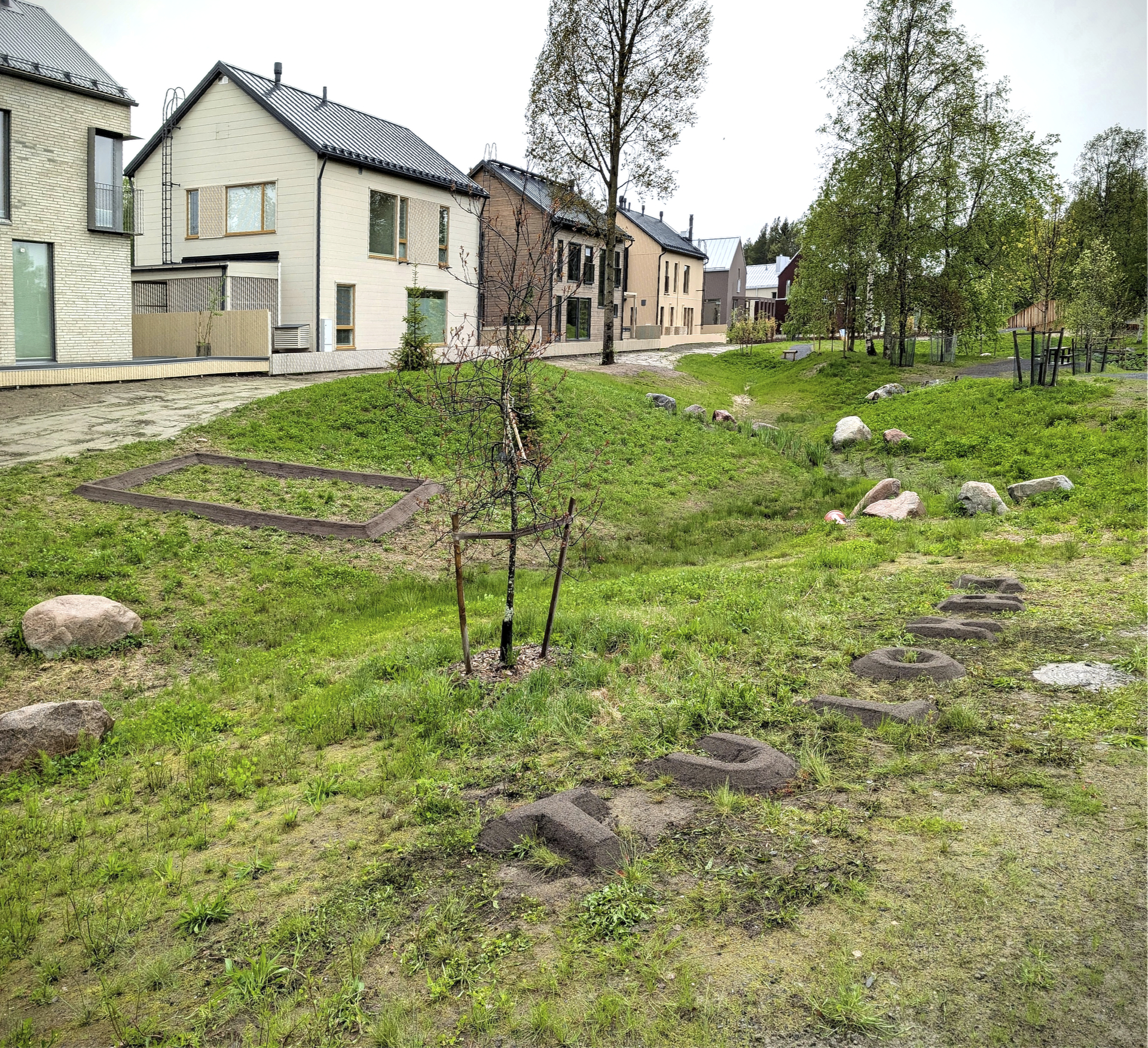
Tulokas, 2025
Multa, siement Teksti: 15 cm x 60 cm x 420 cm Perustukset: 15 cm x 400 cm x 500 cm Ari Björn / Art & Process Soil, seeds Text: 15 cm x 60 cm x 420 cm Foundation: 15 cm x 400 cm x 500 cm Ari Björn / Art & Process
1/4
-
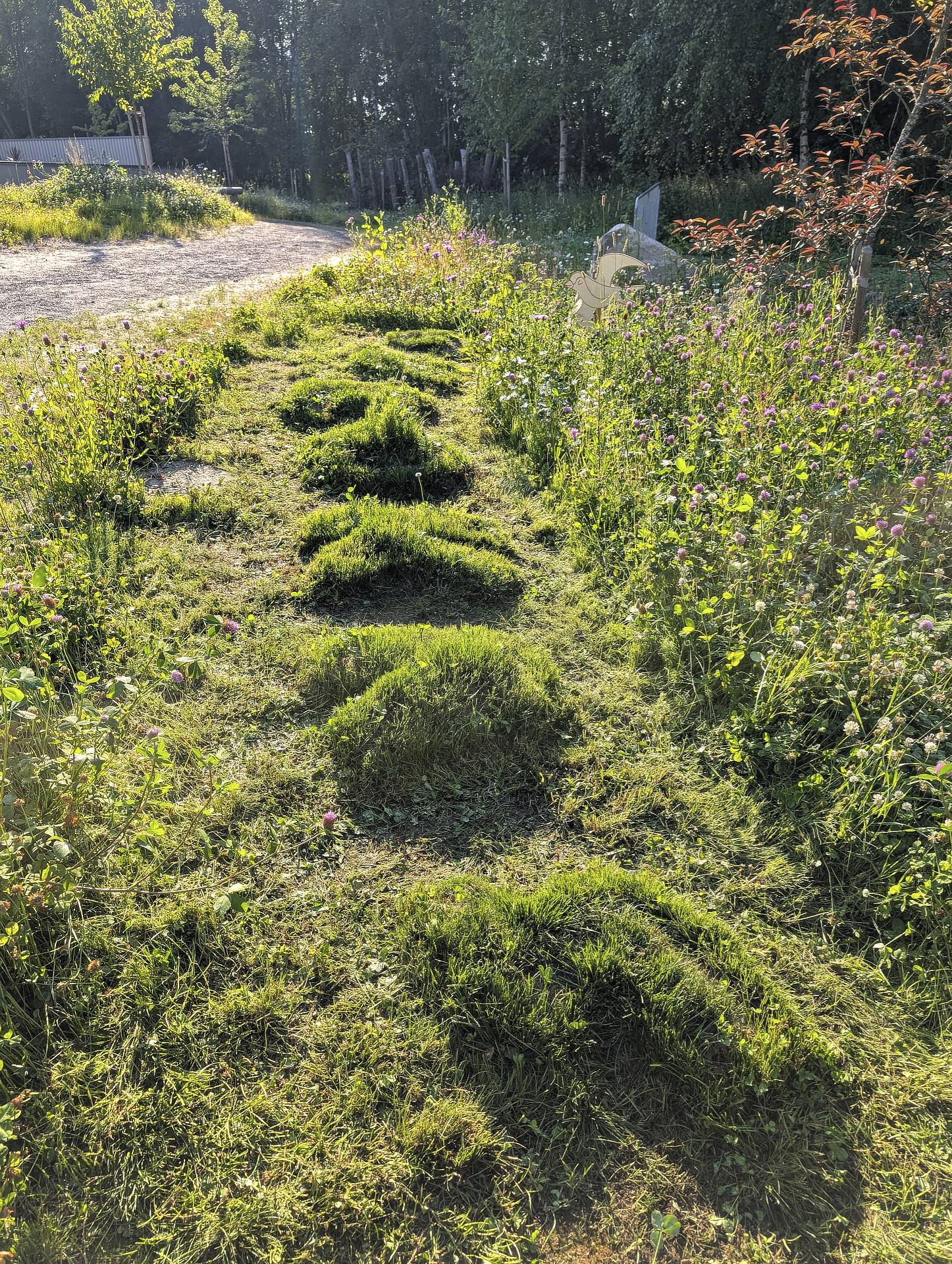
Heinäkuu / July 2025
2/4
-
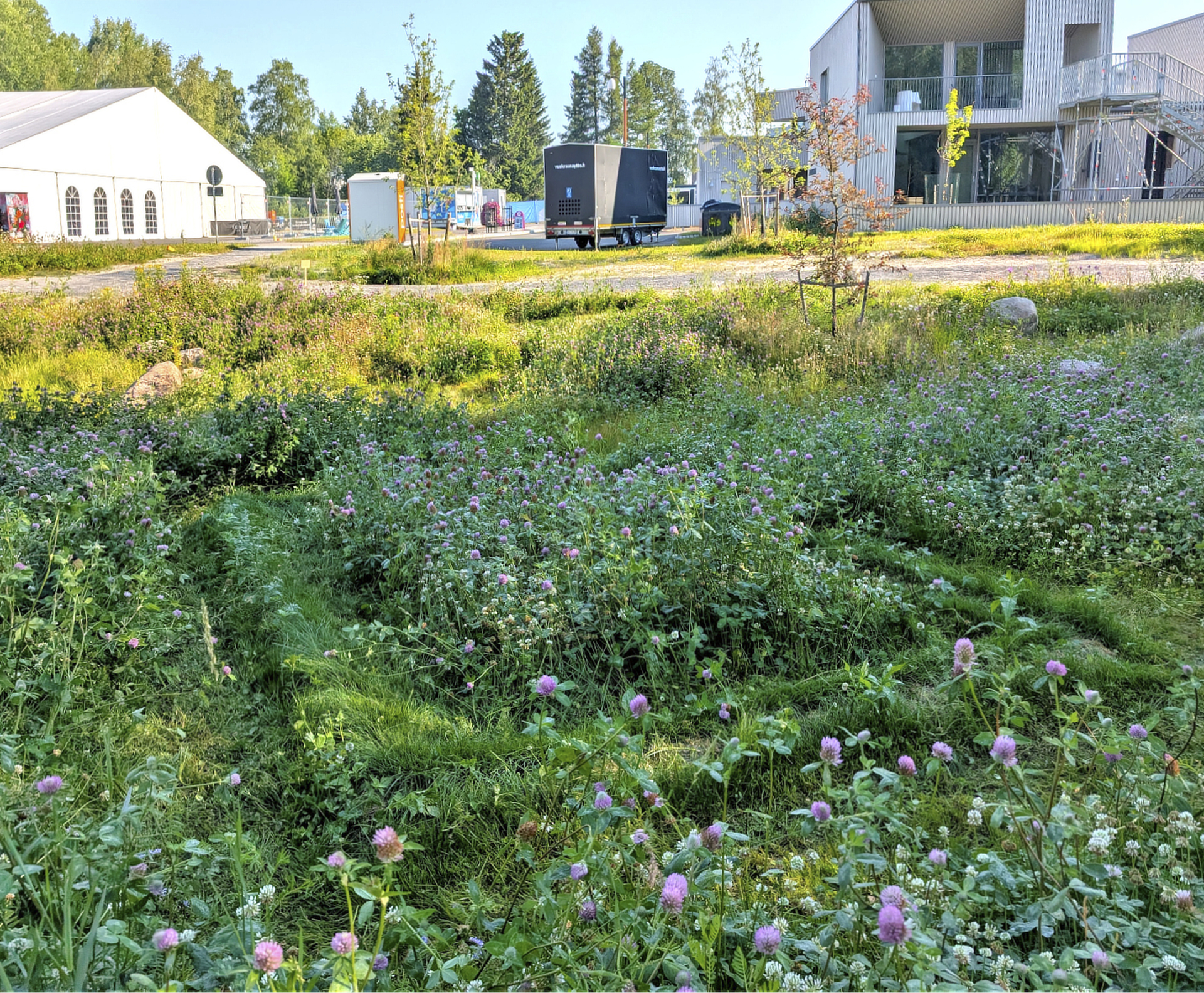
Heinäkuu / July 2025
3/4
-
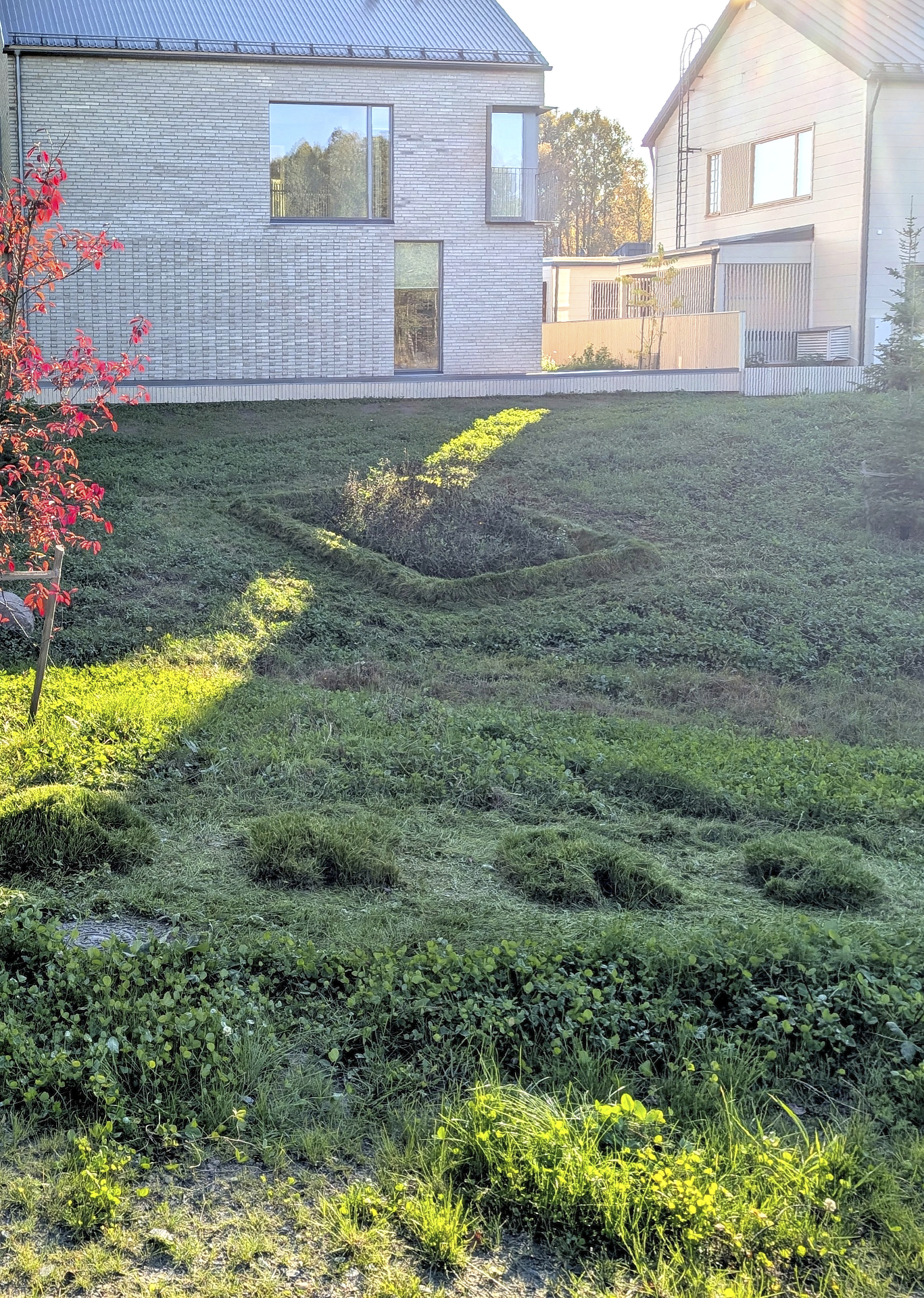
Lokakuu / October 2025
4/4